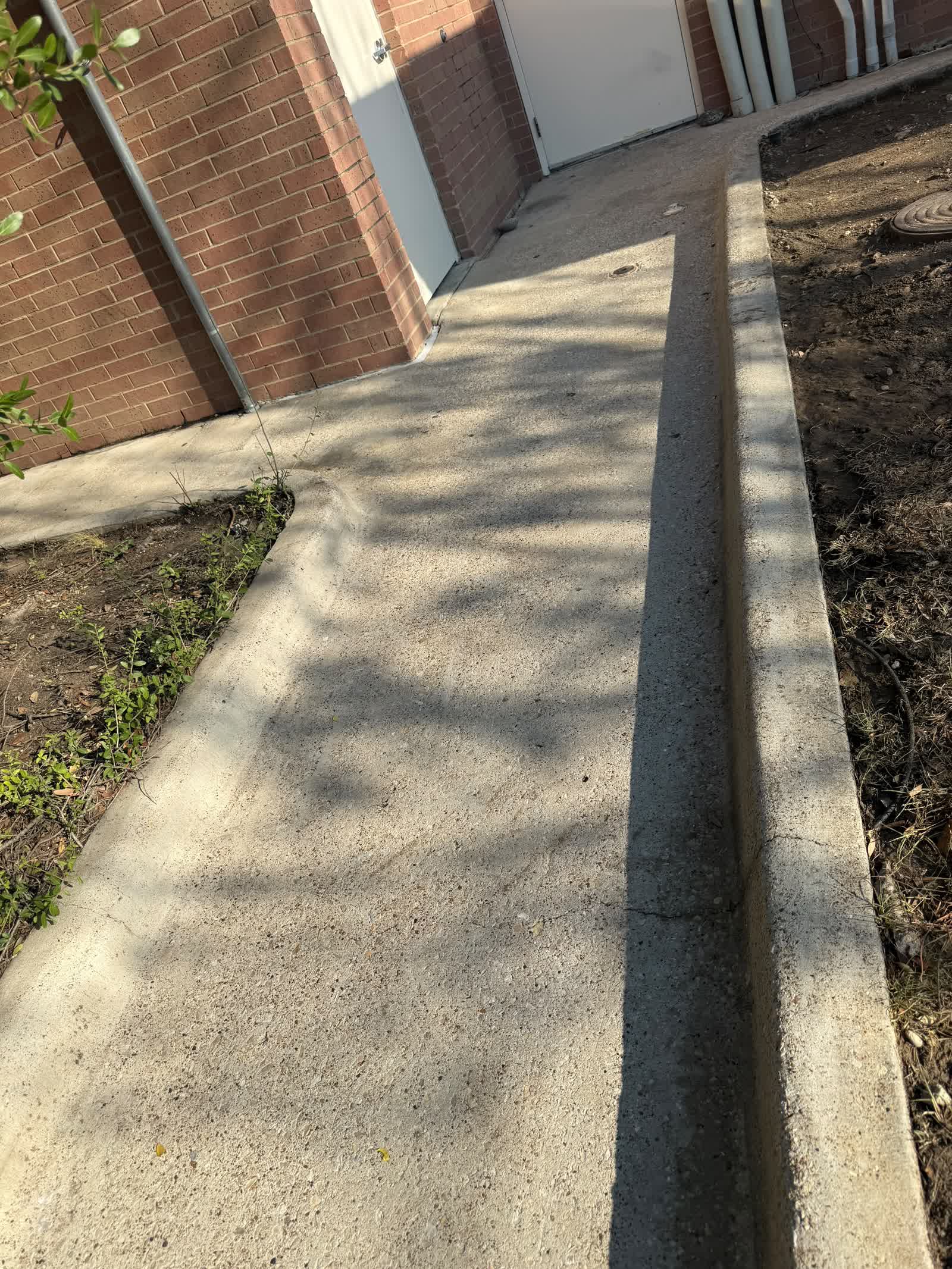
Eco Cleaning Window Services washes commercial entrances, sidewalks and patios across Dallas and Fort Worth, and the first decision on every job is the same: high pressure or soft wash. The rule we use is simple. Hard, sealed surfaces such as concrete, pavers, stone tile and sealed brick get pressure washing at roughly 2,500 to 3,500 PSI. Everything else, including stucco, painted walls, wood, signage and aging mortar, gets a soft wash at under 500 PSI with a cleaning solution doing the work instead of force. Picking wrong in one direction leaves the dirt; picking wrong in the other direction leaves damage you pay for.
What pressure washing actually is
Pressure washing uses water alone, or water with a mild detergent, pushed through a nozzle at high pressure. The force of the water lifts gum, grease, traffic film and biological growth off the surface. It is fast, uses no strong chemicals and is the right tool for the floor in front of your door: the concrete apron, the sidewalk, the paver entry, the tiled patio.
The risk is that high pressure does not know when to stop. Aimed at stucco it blows the finish off. Aimed at painted metal it strips paint. Aimed at a brick wall with old mortar it etches lines and opens joints that then hold water. We have seen entrances along Fort Worth's West 7th where a previous crew left wand marks in the stucco that will never come out without a re-coat.
What soft washing is
Soft washing turns the equation around. The pressure is low, close to a garden hose, and the cleaning comes from a solution, usually a diluted sodium hypochlorite mix with a surfactant, that is applied, allowed to dwell for several minutes and then rinsed. The solution kills algae, mildew and mold at the root and breaks down organic grime, so the rinse takes it away without force.
Soft washing is slower and uses chemistry, which has to be handled with care around landscaping, pets and water drains. It is the right tool for vertical surfaces: stucco facades, painted columns, awnings, signage, EIFS and any surface where the finish matters more than the dirt.
How we decide at a Dallas entrance
Walk from the curb to the door of most Dallas businesses and you cross three surfaces.
The sidewalk and apron
Almost always concrete. Full pressure with a surface cleaner attachment, which keeps the pressure even and avoids the striping a hand wand leaves. Gum and grease spots get a degreaser pre-treatment first.
The entry pad
Pavers, stone tile or stamped concrete. Still pressure washing, but the PSI drops and the nozzle angle widens so joint sand and sealers stay in place. Pavers with polymeric sand need a re-sand after washing.
The wall and columns
Stucco, painted block, brick or metal. Soft wash. The dirt here is mostly biological, which is exactly what the solution is for, and the finish is exactly what high pressure would wreck.
The mistakes we fix most often
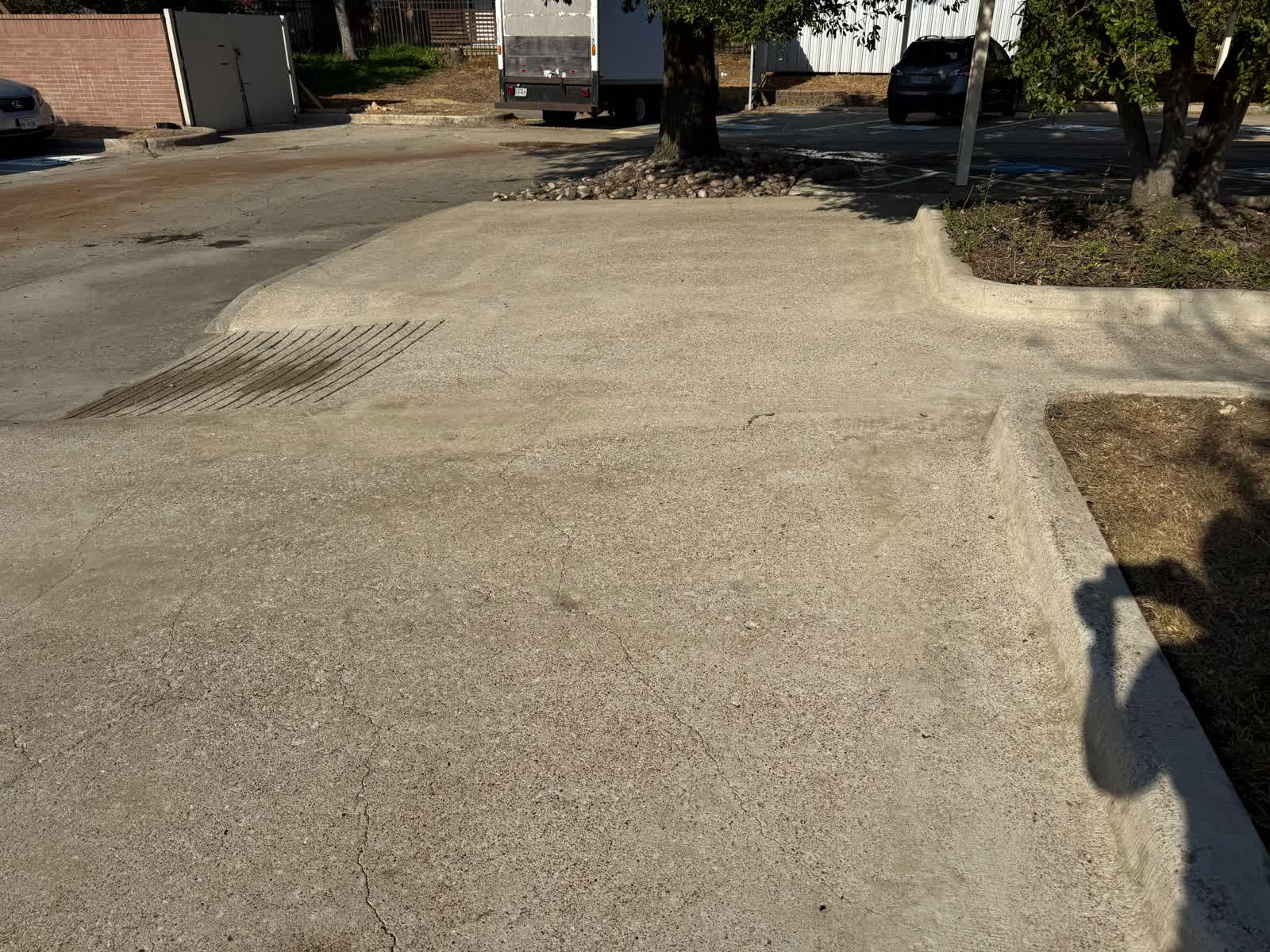
- Tiger striping. A hand wand used at inconsistent distance leaves light and dark stripes on concrete. A surface cleaner prevents it.
- Blown-out joints. High pressure aimed into paver joints removes the sand and the pavers start to shift.
- Chalky stucco. Pressure washing stucco removes the top layer and leaves it chalky and more absorbent, so it gets dirty faster.
- Dead plants. Soft-wash solution left on landscaping without pre-wetting and post-rinsing burns the leaves.
Timing and drying
For a business entrance the schedule matters as much as the method. We do entrances before opening or after close so customers never cross a wet floor. Concrete dries in one to two hours in Dallas heat; pavers take longer because the joints hold water. Soft-washed walls dry on their own and the solution keeps working against algae for weeks after the rinse.
Which one does your entrance need?
Usually both, in the same visit: pressure on the floor, soft wash on the walls, and glass cleaned last so the rinse does not spot it. Send us a photo of your entrance and the address and we quote the right combination for the surfaces you actually have.
Get a pressure washing quote or read about our commercial pressure washing service and floor cleaning.